
What is in Beizray?
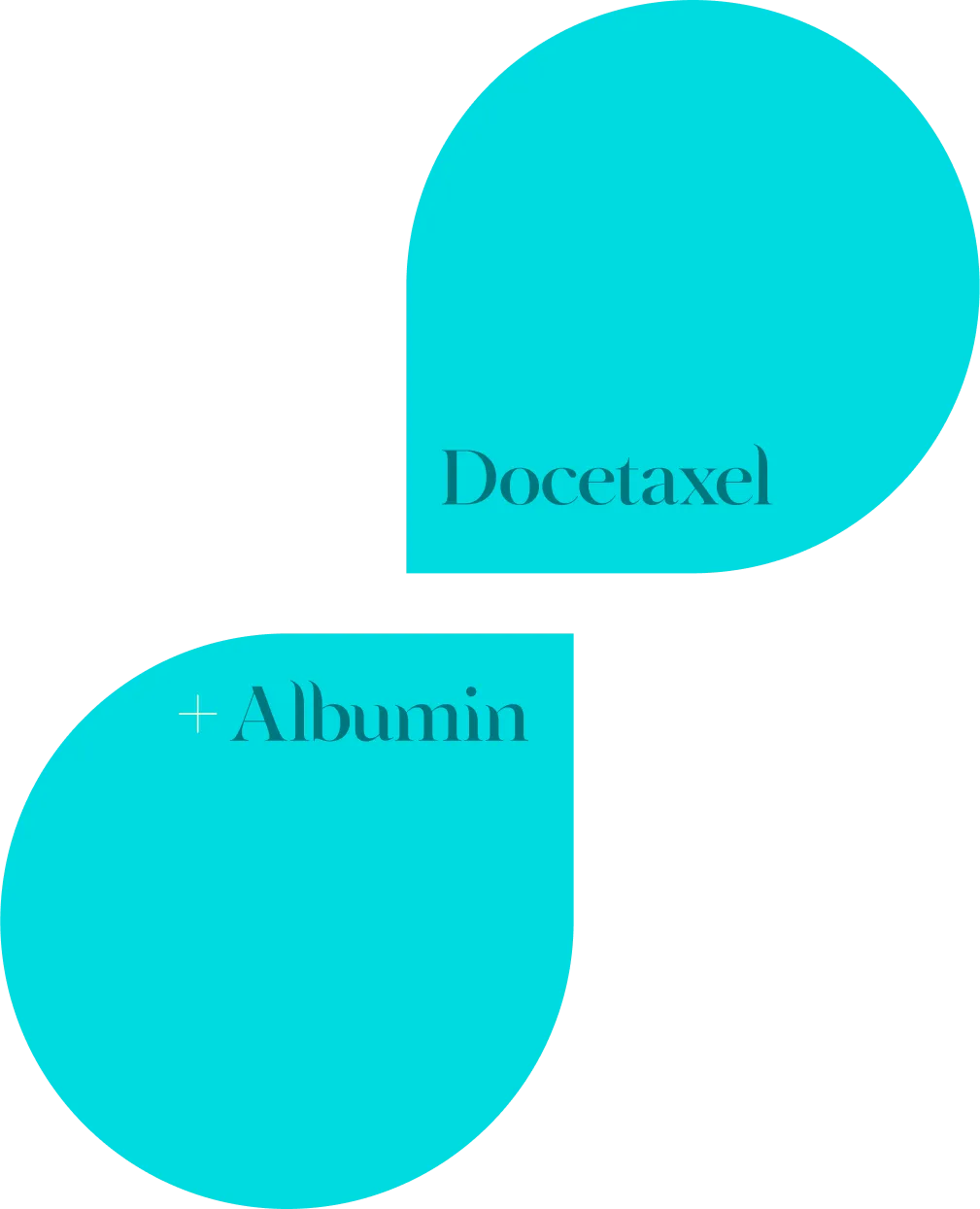
Beizray is the first and only FDA approved formulation of docetaxel to be mixed with human-derived albumin before administration.
Instead of synthetic solvents like PS-80, Beizray uses albumin to deliver docetaxel.
What is albumin?
Albumin is nature’s delivery vehicle. It transports substances like hormones, fatty acids, bilirubin, and drug molecules
It’s the body’s most abundant natural protein found in your blood and highly suitable for drug delivery
What is albumin?
Albumin is nature’s delivery vehicle. It transports substances like hormones, fatty acids, bilirubin, and drug molecules
It’s the body’s most abundant natural protein found in your blood and highly suitable for drug delivery
Albumin acts as a carrier, helping to transport
and stabilize Beizray in your body
Beizray uses Human Serum Albumin (HSA) to transport docetaxel.
Beizray is combined with albumin in the preparation of the IV solution.

Is it effective?
BeizrayTM has demonstrated bioequivalence to Taxotere® as defined in the FDA guidelines.
This means it has the same active ingredient and the same therapeutic effect as the original version of the drug called Taxotere®
(docetaxel).
Taxotere® is a registered trademark of Aventis Pharma S.A. (a Sanofi company).
Download Patient Information Sheet


How is
Beizray given?
Beizray is supplied as separate vials of the anti-cancer medication and albumin, a stabilizer. Your healthcare provider will combine these into a solution.
Beizray will be given to you by your healthcare provider as an intravenous (IV) injection into your vein, usually over 1 hour. Beizray is usually given every 3 weeks.
You may need to take a corticosteroid medicine before each dose to help reduce the risk of allergic reactions and fluid retention. Take it exactly as your doctor tells you.
Your doctor will decide how long you will receive treatment with Beizray.
Your doctor will check your blood cell counts and do other blood tests during
treatment to check for side effects.
Your treatment may be stopped, delayed, or the dose changed if you have certain side effects.

What is the most important information I should know about BEIZRAY ?
BEIZRAY can cause serious side effects, including death.
- The chance of death in people who receive BEIZRAY is higher if you:
- have liver problems
- receive high doses of BEIZRAY
- have non-small cell lung cancer and have been treated with chemotherapy medicines that contain platinum
- BEIZRAY can affect your blood cells. Your healthcare provider should do routine blood tests during treatment with BEIZRAY. This will include regular checks of your white blood cell counts. If your white blood cells are too low, your healthcare provider may not treat you with BEIZRAY until you have enough white blood cells. People with low white blood cell counts can develop life- threatening infections. The earliest sign of infection may be fever. Follow your healthcare provider’s instructions for how often to take your temperature during treatment with BEIZRAY. Call your healthcare provider right away if you have a fever.
- Swelling (inflammation) of the small intestine and colon. This can happen at any time during treatment and could lead to death as early as the first day you get symptoms. Tell your healthcare provider right away if you develop new or worse symptoms of intestinal problems, including stomach (abdominal) pain or tenderness or diarrhea, with or without fever.
- Severe allergic reactions are medical emergencies that can happen in people who receive BEIZRAY and can lead to death. You may be at higher risk of developing a severe allergic reaction to BEIZRAY if you are allergic to paclitaxel. Your healthcare provider will monitor you closely for allergic reactions during your BEIZRAY infusion.
Tell your healthcare provider right away if you have any of these signs of a severe allergic reaction:- trouble breathing
- sudden swelling of your face, lips, tongue, throat, or trouble swallowing
- hives (raised bumps), rash, or redness all over your body
- Your body may hold too much fluid (severe fluid retention) during treatment with BEIZRAY. This can be life threatening. To decrease the chance of this happening, you must take another medicine, a corticosteroid, before each BEIZRAY treatment. You must take the corticosteroid exactly as your healthcare provider tells you. Tell your healthcare provider or nurse before your BEIZRAY treatment if you forgot to take your corticosteroid dose or do not take it as your healthcare provider tells you. Tell your healthcare provider right away if you have swelling in your legs or feet, weight gain or shortness of breath.
- Risk of new cancers. An increase in new (second) cancers has happened in people treated with BEIZRAY together with certain other anticancer treatments. This includes certain blood cancers, such as acute myeloid leukemia (AML), myelodysplastic syndrome (MDS), non-Hodgkin’s Lymphoma (NHL), and kidney cancer.
- Changes in blood counts due to leukemia and other blood disorders may occur years after treatment with BEIZRAY.
Your healthcare provider will check you for new cancers during and after your treatment with BEIZRAY.
- Severe skin problems.
Tell your healthcare provider right away if you have any of these signs of a severe skin reaction:- redness and swelling of your arms and legs.
- blistering, peeling, or bleeding on any part of your skin (including your lips, eyes, mouth, nose, genitals, hands or feet) with or without a rash. You may also have flu-like symptoms such as fever, chills, or muscle aches.
- red, scaly rash all over your body with blisters, small red or white bumps under the skin that contain pus (pustules), and fever.

What are the
possible side
effects of
BEIZRAY?
BEIZRAY may cause serious side effects including death.
-
- See “What is the most important information I should know about BEIZRAY?“
- Neurologic problems. Neurologic symptoms are common in people who receive BEIZRAY but can be severe. Tell your healthcare provider right away if you have numbness, tingling, or burning in your hands or feet (peripheral neuropathy) or weakness of your legs, feet, arms, or hands (motor weakness).
- Vision problems including blurred vision or loss of vision. Tell your healthcare provider right away if you have any vision changes.
- BEIZRAY injection contains alcohol. The alcohol content in BEIZRAY may impair your ability to drive or use machinery right after receiving BEIZRAY. Consider whether you should drive, operate machinery or do other dangerous activities right after you receive BEIZRAY treatment.
- Tumor lysis syndrome (TLS). TLS is caused by the fast breakdown of cancer cells. TLS can cause kidney failure, the need for dialysis treatment, or heart problems, and may lead to death. Your healthcare provider will do blood tests to check for TLS when you first start treatment and during treatment with BEIZRAY. Tell your healthcare provider right away if you have any symptoms of TLS during treatment with BEIZRAY, including:
-
-
- nausea
- vomiting
- confusion
- shortness of breath
- irregular heartbeat
- dark or cloudy urine
- reduced amount of urine
- unusual tiredness
- muscle cramps
-
You may experience side effects of this medicine that may impair your ability to drive, use tools, or operate machines. If this happens, do not drive or use any tools or machines before discussing with your healthcare provider.

The most common
side effects of
BEIZRAY include:
- infections
- low white blood cells (help fight infections), low red blood cells (anemia), and low platelets (help blood to clot)
- allergic reactions (See “What is the most important information I should know about BEIZRAY?”)
- changes in your sense of taste
- shortness of breath
- constipation
- decreased appetite
- changes in your fingernails or toenails
- swelling of your hands, face, or feet
- feeling weak or tired
- joint and muscle pain
- nausea and vomiting
- diarrhea
- mouth or lip sores
- hair loss: in some people, permanent hair loss has been reported
- redness of the eye, excess tearing
- skin reactions at the site of BEIZRAY administration such as increased skin pigmentation, redness, tenderness, swelling, warmth or dryness of the skin
- tissue damage if BEIZRAY leaks out of the vein into the tissues
Tell your healthcare provider if you have a fast or irregular heartbeat, severe shortness of breath, dizziness or fainting during your infusion. If any of these events occurs after your infusion, get medical help right away.
BEIZRAY may affect fertility in males. Talk to your healthcare provider if this is a concern for you.
These are not all of the possible side effects of BEIZRAY. For more information, ask your healthcare provider or pharmacist.
Call your healthcare provider for medical advice about side effects. You may report side effects to FDA at 1-800-FDA-1088
These are not all the possible side effects of BEIZRAY. For more information, ask your doctor or pharmacist. You may report side effects to Zydus Pharmaceuticals (USA) Inc. at 1-877-993-8779 or FDA at 1-800-FDA-1088.